Source Goat Hoof Trimmer for Cattle, Sheep, and Horse
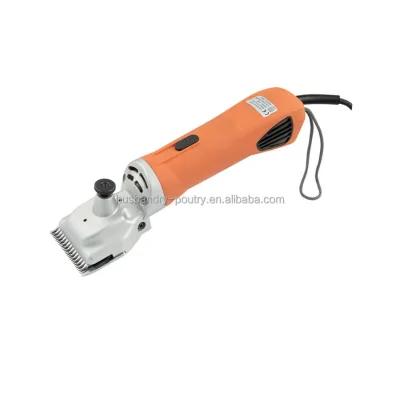
Find 30 goat hoof trimmer options for livestock management. Compare manual and electric models from Chinese manufacturers to select the right tool for cattle, sheep, and horse care.
Key considerations
Products List


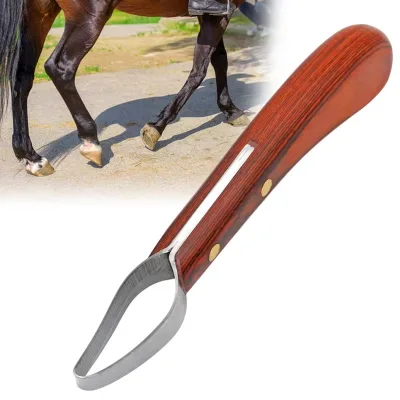
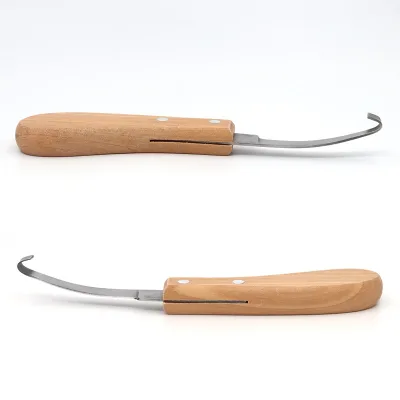


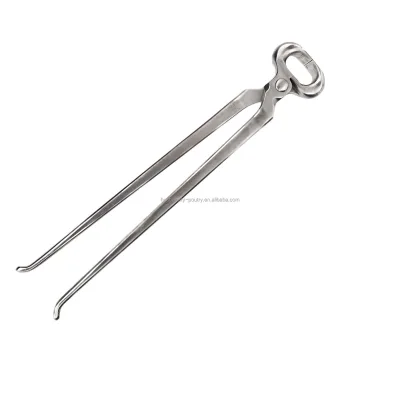
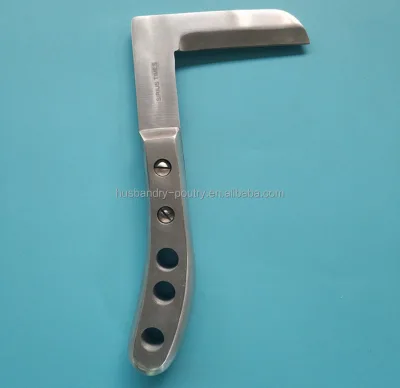


Comprehensive Sourcing Guide
Strategic Sourcing Guide for Livestock Hoof Trimming Equipment
The global agricultural sector relies heavily on precise animal husbandry tools to maintain herd health and operational efficiency. Among these, the goat hoof trimmer represents a critical piece of equipment designed to prevent lameness, reduce injury risks, and ensure the longevity of livestock assets. For procurement professionals and farm managers, sourcing these tools requires a disciplined approach that balances technical specifications with supply chain reliability. This guide provides a comprehensive framework for evaluating goat hoof trimmers, focusing on verified product attributes, compliance standards, and cost structures derived from current market data.
Technical Specifications and Operational Mechanics
Understanding the mechanical design of hoof trimming tools is the first step in defining procurement requirements. The market offers a variety of configurations, ranging from manual handheld devices to more complex stationary units. Based on observed product data, the primary operating method for many high-demand units is manual. These tools typically feature a robust construction utilizing steel pipes or a combination of wooden handles and stainless steel blades. The material choice is paramount; stainless steel blades ensure durability and resistance to corrosion, which is essential when dealing with organic matter and frequent cleaning.
A specific design feature observed in several models is the ability to rotate 180 degrees. This mechanical advantage allows the operator to adjust the angle of the blade without repositioning the entire tool, significantly reducing operator fatigue and increasing precision during the trimming process. The target species for these tools are diverse, including goats, horses, sheep, and cattle. Consequently, the "Properties" of the tool often describe it as a universal cattle hoof trimming tool, indicating versatility across different farm environments.
When evaluating specifications, buyers must look beyond the generic "Goat Hoof Trimmer" label. Specific model numbers such as XTC-G, 633, 324650, and 3FXTC indicate distinct manufacturing batches or design iterations. Some units are categorized as "Handheld" types, while others may be part of a larger system like a "Cow Hoof Trimming Chute." The physical dimensions also vary; for instance, some single packages measure 20x5x5 cm with a gross weight of 0.18 kg, suggesting a lightweight, portable design, whereas other specifications list standard dimensions of 1680x1020x1160 mm, which likely refers to larger containment or processing units rather than the handheld trimmer itself.
Compliance, Certification, and Safety Standards
In the B2B procurement of agricultural machinery, verifying compliance is non-negotiable. The supply chain for these tools often originates from specific manufacturing hubs in China, including Henan and Shandong provinces. While the country of origin is a logistical fact, the certification status of the product is a quality indicator. Current market observations confirm that certain units carry ISO9001 certification, specifically noted as "ISO9001:Condition:New." This suggests that the manufacturing facility adheres to international quality management standards, ensuring consistent production processes.
However, buyers must exercise caution regarding sterilization claims. A significant portion of the observed product data explicitly states "Without Disinfection" and "Without Ethylene Oxide Sterilization." This is a critical distinction for buyers who require pre-sterilized medical-grade or high-hygiene equipment. If a facility requires sterilized tools for immediate use upon arrival, these specific listings would not meet the requirement without additional post-purchase processing. Conversely, for standard livestock operations where tools are cleaned and disinfected on-site, the lack of pre-sterilization is a standard industry practice that does not compromise safety.
The "Computerized:Computerized" certification noted in some data points appears to be a data artifact or a misclassification, as the primary operating method is listed as "Manual." Procurement teams should verify this attribute directly with the supplier to ensure the tool is not mislabeled as an automated system when it is, in fact, a manual device. Relying on the "Condition: New" attribute is generally safe, but cross-referencing with the "After-Sales Service: Yes" and "Warranty: 1 Year" attributes provides a stronger assurance of product integrity and supplier accountability.
Cost Drivers and Pricing Structures
The pricing landscape for goat hoof trimmers is highly variable, reflecting the diversity in materials, complexity, and order volume. The observed price range spans from $1.20 to $15,200 USD. This wide disparity is not indicative of a single product line but rather a spectrum of offerings. The lower end of the range likely corresponds to simple, manual handheld trimmers with basic steel or wooden construction. The upper end of the spectrum may include larger, specialized chutes, automated systems, or bulk industrial packaging solutions.
A primary driver of cost in this category is the Minimum Order Quantity (MOQ). The data reveals a broad MOQ range from 1 unit to 2,000 units. Some suppliers list an MOQ of 10 pieces, making them accessible for small farms or individual veterinarians. Others require orders of 500, 1,000, or even 2,000 pieces. This volume-based pricing structure means that the unit cost is heavily dependent on the buyer's scale. For a buyer seeking a single unit, the price per item will be significantly higher than for a buyer placing a bulk order of 2,000 units.
Additionally, packaging costs influence the final price. Products are shipped in various formats, including wooden boxes, wooden cases, and cartons. The choice of packaging often correlates with the value of the item and the fragility of the components. A "Wooden Case" is typically more expensive than a standard "Carton" but offers superior protection for heavy-duty equipment. Buyers should factor these logistical costs into their total cost of ownership (TCO) calculations, especially when importing from international origins.
Typical Applications and Target Species
The application of goat hoof trimmers extends beyond simple trimming; it is a preventive health measure. The primary use case is "Cutting hoof, hoof trimming," which directly contributes to the "prevention of lameness and injury of the horse" and similar conditions in other livestock. The tools are designed for target species including goats, horses, sheep, and cattle. This versatility allows a single procurement order to service a mixed-livestock farm, reducing the need for specialized, species-specific tools.
The "Advantage" of these tools is often marketed as helping to prevent lameness, which is a major economic loss in livestock farming. By maintaining proper hoof health, farmers can reduce veterinary costs and improve animal mobility. The tools are also described as "Reusable," which is a key economic factor for long-term procurement. Unlike disposable blades, reusable tools require an initial investment but offer a lower cost per use over time.
When selecting a tool for a specific application, buyers should consider the "Type" of the tool. For example, a "Handheld" tool is ideal for individual animal treatment in a pen or chute, whereas a "Chute" system might be necessary for high-volume processing in a commercial feedlot. The "Selling Units" are often listed as "Single item," indicating that the product is sold individually rather than in kits, though bulk purchasing options exist.
Supplier Evaluation and Quality Control
Evaluating suppliers for goat hoof trimmers requires a focus on several key attributes. First, the "Brand Name" is a relevant factor; for instance, "Zhumuren" is a brand observed in the market. While this does not guarantee quality, it provides a reference point for brand reputation and after-sales support. The presence of "After-Sales Service: Yes" is a critical differentiator. Buyers should verify the scope of this service, including the availability of replacement parts and the duration of the warranty, which is typically listed as "1 Year."
Quality control should be a collaborative process between the buyer and the supplier. Since the "Standard" for some products is listed as "Customized," buyers must ensure that the final product meets their specific operational needs. For standardized products, the "prod_standard" dimensions (e.g., 1680x1020x1160 mm) serve as a benchmark. Buyers should request physical samples or detailed technical drawings to verify that the "Material" (Steel Pipe or Wooden handle + stainless steel blade) matches the specification.
The "Place of Origin" is another verification point. Products originating from Henan or Shandong, China, are common in this category. While the origin itself is not a quality indicator, it helps in logistics planning and understanding the supply chain lead times. Buyers should also verify the "Condition" of the product, ensuring it is "New" and not refurbished, unless explicitly stated otherwise.
Long-Term Procurement Considerations
Sourcing goat hoof trimmers is not a one-time transaction but a long-term investment in farm infrastructure. The "Warranty" of 1 year provides a baseline for product reliability, but buyers should consider the long-term availability of spare parts. Given that the tools are "Reusable," the durability of the blade and the structural integrity of the handle are critical. The "Material" choice, such as stainless steel, directly impacts the lifespan of the tool.
Buyers should also consider the "Ethylene Oxide Sterilization" status in the context of their biosecurity protocols. If the farm operates under strict biosecurity measures, the lack of pre-sterilization may necessitate an internal sterilization process, which adds to the operational cost. Conversely, for farms with robust cleaning protocols, this is a non-issue.
Finally, the "MOQ" of 2,000 units for some suppliers suggests a focus on large-scale distributors. For smaller buyers, identifying suppliers with lower MOQs (e.g., 10 or 100 pieces) is essential to manage cash flow and inventory risk. The "Selling Units" being "Single item" allows for flexible purchasing, but buyers should negotiate volume discounts where possible to align with the observed price range of $1.20 to $15,200.
Comparative Analysis of Product Attributes
To assist in decision-making, the following table summarizes key attributes observed across different product listings. This comparison highlights the variability in specifications and helps buyers identify the most suitable options for their specific needs.
| Attribute | Observation A | Observation B | Observation C |
|---|---|---|---|
| Operating Method | Manual | Manual | Electric |
| Material | Steel Pipe | Wooden handle + stainless steel blade | Steel Pipe |
| Certification | ISO9001:Condition:New | ISO9001:Computerized:Computerized | None Listed |
| MOQ | 2000 | 1000 | 500 Pieces |
| Packing | Wooden Box | Carton | Wooden Case |
| Target Species | Goat, Horse, Sheep, Cattle | Cattle, Horse, Donkey | Sheep |
| Sterilization | Without Disinfection | Without Ethylene Oxide Sterilization | Without Disinfection |
| Warranty | 1 Year | 1 Year | 1 Year |
| Origin | China | Henan, China | Shandong, China |
| Feature | Rotate 180 Degrees | Reusable | Animals Hoof Repair Tools |
This table illustrates that while the core function remains consistent, the specific attributes vary significantly. Buyers must align these attributes with their operational constraints, such as the need for electric power sources versus manual operation, or the requirement for specific packaging types.
Conclusion
Sourcing goat hoof trimmers requires a meticulous evaluation of technical specifications, compliance standards, and supplier capabilities. The market offers a wide range of options, from simple manual tools to complex systems, with prices and MOQs that vary by volume and specification. By focusing on verified attributes such as material quality, certification status, and after-sales support, buyers can make informed decisions that ensure the health of their livestock and the efficiency of their operations. The key to successful procurement lies in matching the specific product attributes to the unique needs of the farm, ensuring that the selected tool is not only effective but also sustainable in the long term.
FAQs
What is the operating method for most goat hoof trimmers?
Most goat hoof trimmers operate manually rather than electrically. While some listings mention electric power sources, the primary observed method is manual operation using steel pipes or wooden handles with stainless steel blades for precise trimming.
Which certifications are available for these livestock tools?
Some units carry ISO9001 certification indicating adherence to quality management standards. Buyers should verify this status as some data points show conflicting or artifact-based certifications like computerized claims that do not match the manual operating method.
Can I find goat hoof trimmers with low minimum order quantities?
Yes, suppliers offer varying minimum order quantities ranging from 10 pieces up to 2000 units. Smaller farms can source single items or small batches, while larger operations may need to meet higher volume thresholds to access specific pricing tiers.
How are these trimmers packaged for international shipping?
Packaging options include wooden boxes, wooden cases, and standard cartons depending on the model. The choice of packaging often correlates with the product value and fragility, with heavier equipment typically requiring more robust wooden cases for protection.
What warranty is typically provided for these trimming tools?
A standard warranty of one year is commonly offered for new goat hoof trimmers. This warranty covers defects and ensures supplier accountability, though buyers should confirm specific terms regarding after-sales service and replacement parts availability.
Which target species can these hoof trimmers accommodate?
These tools are designed for multiple target species including goats, horses, sheep, and cattle. The versatility allows farmers to use a single type of handheld or chute system for trimming hooves across different livestock on mixed farms.